Capsule Dipping Defects Linked to Gelatin Preparation
For a gelatin capsule manufacturer, many visible dipping defects begin before the pins enter the gelatin mass. Shell thickness variation, poor pin coverage, stringing, entrained air, brittleness, and unstable drying behavior often trace back to how the gelatin solution was hydrated, heated, mixed, held, filtered, deaerated, and adjusted before dipping.
BloomPilot supports capsule producers and gelatin processors with enzyme solutions designed for controlled preparation behavior, batch repeatability, and practical line outcomes. If you are evaluating an enzyme supplier for gelatin processing, the right discussion should start with your process window: viscosity profile, bloom target, thermal history, hold time, deaeration efficiency, and the shell-quality defects seen at the dipping line.
Why gelatin preparation shows up as dipping defects
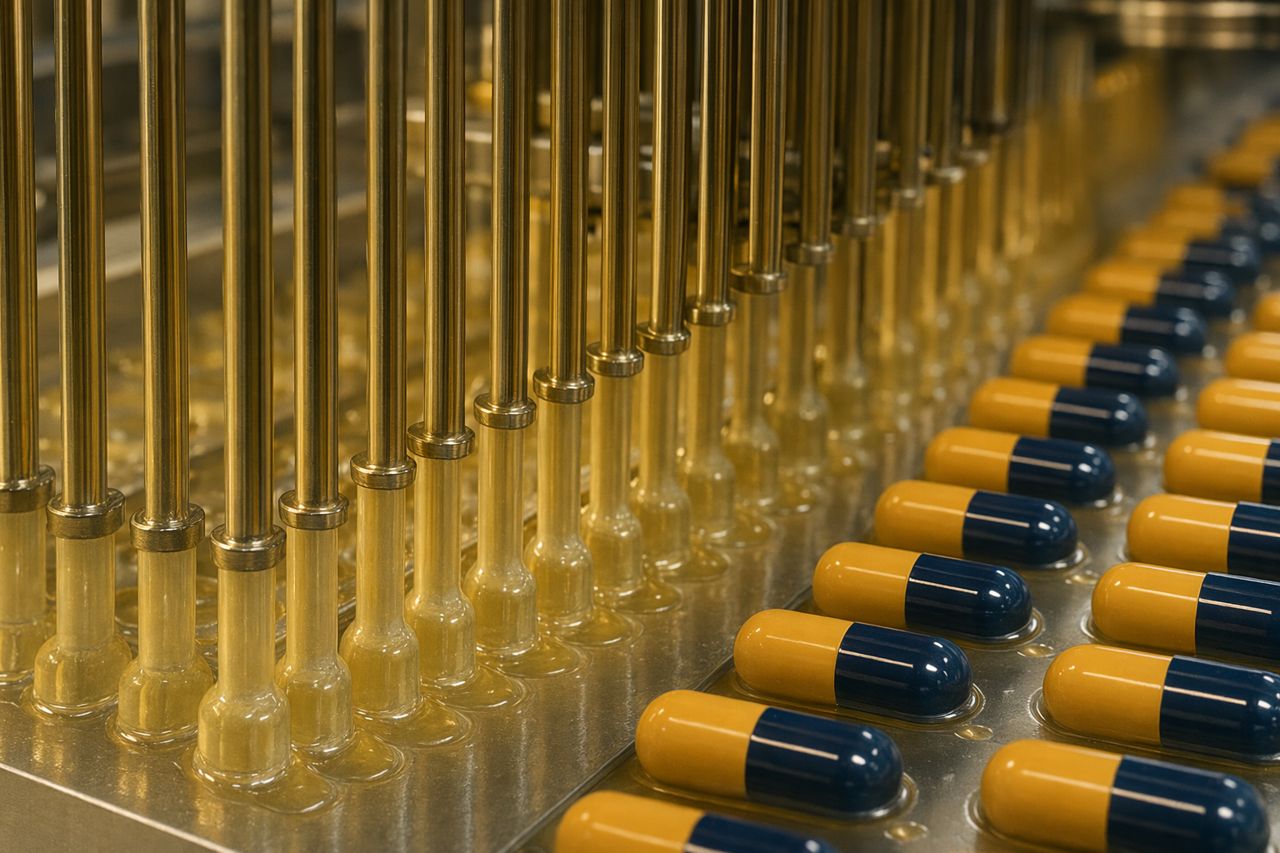
Capsule dipping depends on a narrow balance. The gelatin mass must wet the pins consistently, form an even film, drain predictably, release cleanly after drying, and retain the mechanical strength required for trimming, joining, filling, and handling.
When the gelatin preparation stage drifts, the dipping machine may still run, but the line begins to show small instability signals:
- Film thickness moves across pin rows or production shifts.
- Capsule halves show uneven shoulder build or weak body coverage.
- Strings remain between pins and gelatin surface after withdrawal.
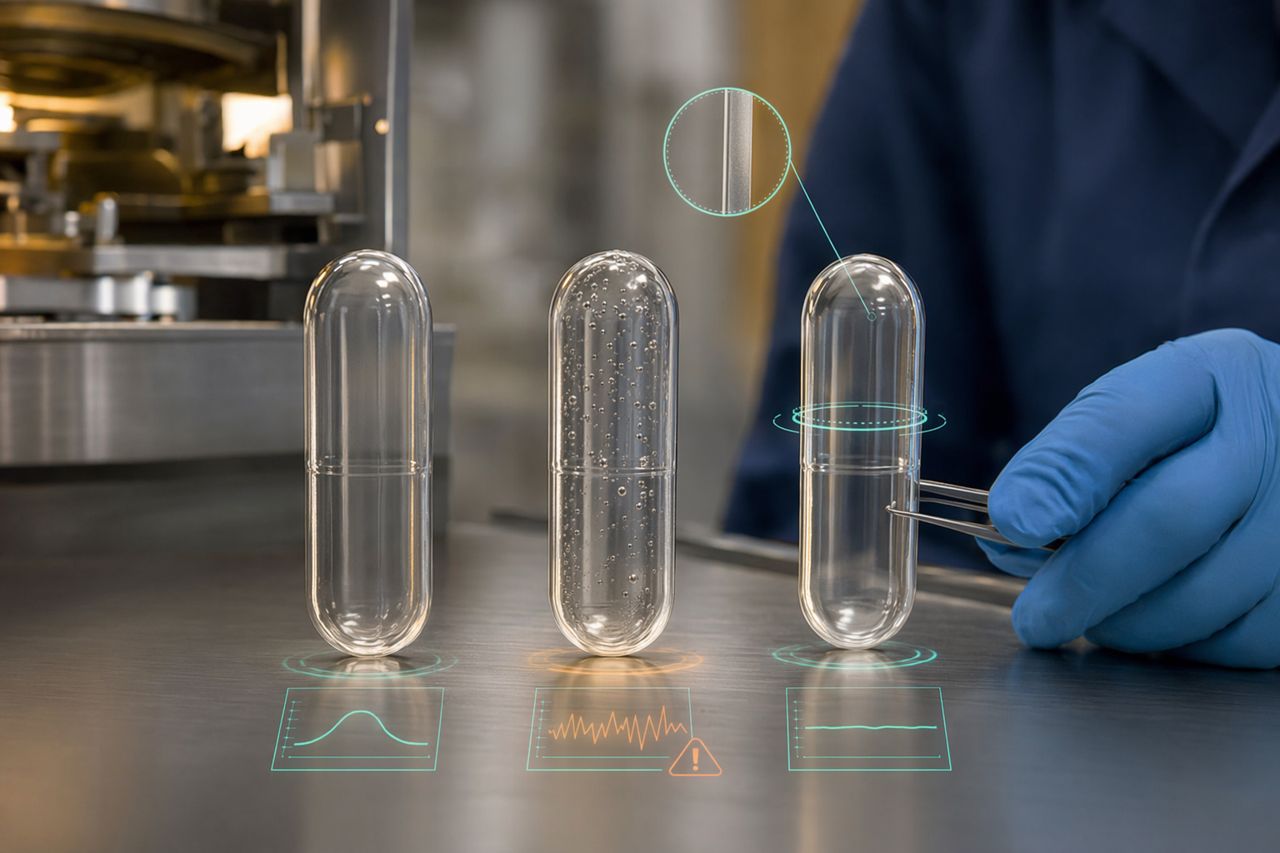
- Micro-bubbles appear in the shell wall or near the cap dome.
- Shells dry too fast, too slowly, or unevenly.
- Finished capsules become brittle, warped, or difficult to join.
These are not always machine-setting problems. In many cases, the dipping station is responding to gelatin mass behavior created upstream.
Preparation variables that influence shell quality
Hydration consistency
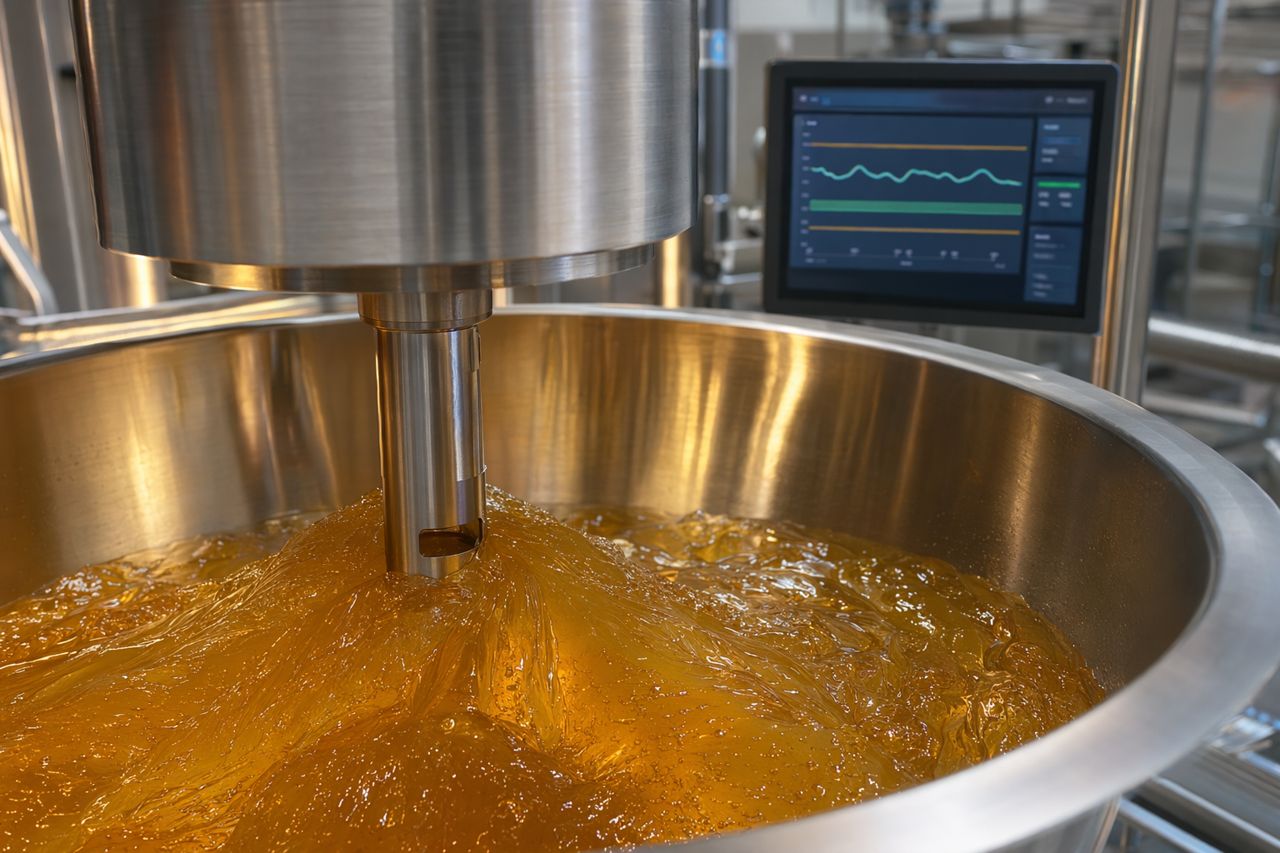
Incomplete hydration creates local concentration variation. The mass may look uniform in the kettle but still behave unevenly during pin withdrawal. Poor hydration can contribute to streaking, weak spots, variable wall thickness, and inconsistent drying.
A stable hydration procedure should control addition sequence, water temperature, soak time, agitation intensity, and transfer timing. The objective is not simply to dissolve gelatin; it is to create a repeatable molecular and rheological condition before final adjustment.
Thermal history
Gelatin is sensitive to heat exposure. Excessive temperature, long holding, or repeated heat cycles can shift viscosity and gel strength behavior. This can change film pickup on the pins and affect shell integrity after drying.
Production teams should track not only the target temperature, but also the time spent at temperature, kettle turnover, recirculation pattern, and dead zones where localized overheating can occur.
Viscosity profile
Viscosity is one of the strongest links between preparation and dipping performance. If viscosity is too high, pin coverage may be heavy and stringing may increase. If viscosity is too low, the film can drain too quickly, causing thin shell walls, shoulder weakness, and variable capsule weight.
The most useful control approach is to monitor viscosity behavior across the preparation and holding window, not just at a single release point. Stable dipping requires the mass to remain predictable during the actual production run.
Bloom and mechanical response
Bloom strength influences capsule-shell firmness, drying response, and finished-capsule handling. A gelatin mass can meet a nominal specification and still behave differently if the molecular distribution has shifted through processing.
For capsule manufacturers, bloom behavior should be interpreted alongside viscosity, drying observations, brittleness complaints, and machine feedback. A single number rarely explains the full defect pattern.
Air management
Air entrainment is a common source of visual defects. Micro-bubbles can enter through aggressive agitation, poor transfer design, vortex formation, pump cavitation, or inadequate deaeration time.
Bubbles in the gelatin mass may later appear as pinholes, cloudy points, shell-wall voids, or brittle fracture points. Deaeration should be treated as a controlled preparation step, not a waiting period.
Defect links production teams can investigate
Uneven shell thickness
Likely preparation contributors include viscosity drift, hydration variability, inconsistent solids concentration, temperature gradients, and unstable hold conditions. Review kettle uniformity before changing dipping speed or pin temperature.
Poor pin coverage
Weak wetting or thin film formation may come from low viscosity, excessive thermal exposure, concentration error, or gelatin lots with different response profiles. Pin cleanliness matters, but gelatin mass behavior should be checked early.
Stringing at withdrawal
Stringing often reflects a mass that is too elastic, too viscous, poorly temperature-balanced, or held outside its stable process window. It can also indicate a mismatch between withdrawal speed and gelatin flow behavior.
Micro-bubbles and cloudy inclusions
Entrained air can result from mixing, transfer, pump selection, and deaeration limits. If bubbles repeat by batch rather than by machine lane, preparation is a strong suspect.
Brittleness after drying
Brittleness may be linked to gelatin selection, thermal history, moisture profile, drying conditions, plasticizer balance where used, or excessive molecular breakdown during preparation. The investigation should connect kettle data with drying-room data and finished-shell testing.
Drying instability
If shells dry unevenly or behave differently between batches under the same drying-room settings, the gelatin mass may be entering the dipping line with different solids, viscosity, bloom response, or air content.
Where enzyme support fits
Enzyme use in gelatin processing should be controlled, documented, and aligned with the final capsule-shell requirement. The objective is not aggressive modification. The objective is a stable process window that supports predictable viscosity, manageable flow, and repeatable shell quality.
BloomPilot helps technical teams evaluate enzyme options in relation to:
- Gelatin source and incoming variability.
- Target viscosity and bloom behavior.
- Heating and holding profile.
- Filtration and deaeration constraints.
- Dipping line speed and withdrawal behavior.
- Defect frequency by batch, lane, and shift.
- Finished capsule strength, appearance, and drying response.
A good enzyme supplier for gelatin processing should be able to discuss plant conditions, not only product names. Capsule quality depends on how the solution behaves in your tanks, pipes, holding vessels, and dipping line.
Practical preparation checks before changing the dipping machine
Before adjusting the dipping line to compensate for shell defects, review these preparation checkpoints:
- Confirm gelatin hydration sequence and soak consistency.
- Compare heating curves across acceptable and defective batches.
- Check hold time, recirculation, and kettle turnover.
- Review viscosity trend over the full dipping window.
- Confirm filtration condition and pressure behavior.
- Inspect mixing intensity and vortex formation.
- Evaluate deaeration time, vacuum stability, and transfer method.
- Compare bloom response with finished-shell brittleness and joining data.
- Map defect location by pin row, machine lane, batch, and production shift.
This approach helps separate true mechanical issues from preparation-driven variation.
What BloomPilot brings to the evaluation
BloomPilot provides enzyme guidance for gelatin processing with a focus on manufacturing repeatability. We work from your process reality: raw material variability, kettle behavior, target shell properties, equipment limits, and the quality signals your team already tracks.
Our technical support is structured for production managers, process engineers, and quality teams who need clear recommendations that can be tested at plant scale. We help connect gelatin preparation behavior to capsule-shell outcomes so corrective actions are grounded in evidence rather than repeated trial-and-error at the dipping machine.
Request a quote
If capsule dipping defects are repeating across batches, BloomPilot can help evaluate whether gelatin preparation and enzyme strategy are part of the control plan.
Use the on-site request a quote form to share your gelatin source, process outline, target shell behavior, and current defect pattern. We will respond with practical next steps for supplier evaluation and plant trials.